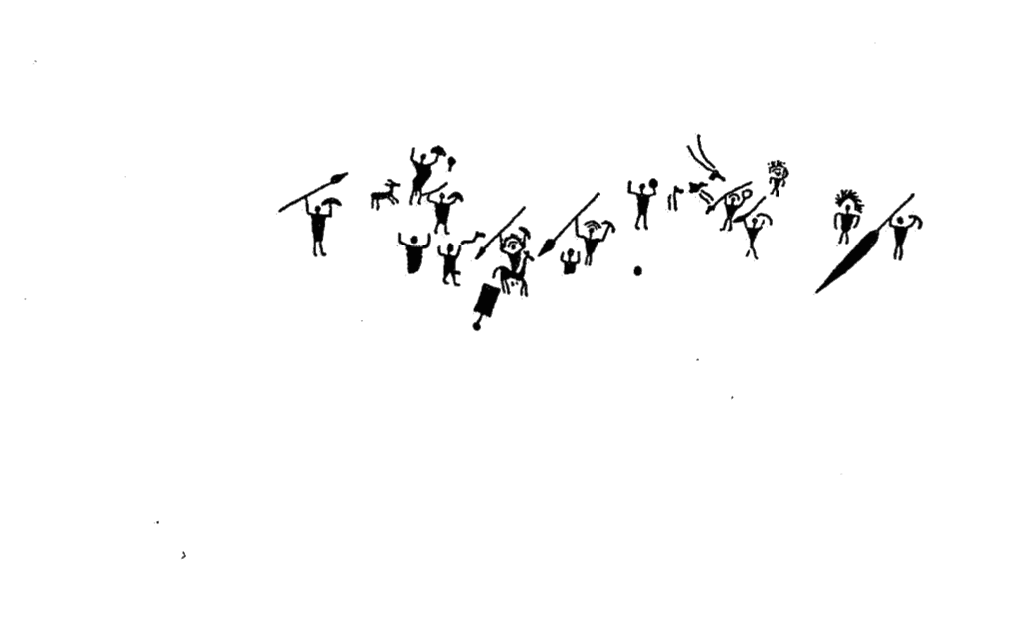
Seven works composed over nine years, each drawing on the prehistoric rock carvings of Val Camonica in northern Italy — and on the work of the archaeologist Emmanuel Anati, who has spent his life cataloguing them. The pieces move across the continuum from conventional to graphic notation, gradually relinquishing the stave until, in the later works, the rock carvings themselves are transcribed directly onto the page.
The series began with books and illustrations. Some of the music was composed before I had ever seen the valley. I first went there in 2002, and it was standing above the Mappa di Bedolina at Capo di Ponte, with the roads and river below lining up with the scratched lines in the rock, that the work found its ground.
The pieces
The pieces can be performed in any order and in any combination — as one might encounter individual rock carvings or sweeping scenes wandering through the Parco Nazionale. They are presented here in the order they were composed. Recordings are embedded with each piece below.
The titles do not refer to three styles of rock carving themselves, but to Anati's attempt to sort the chaos of varying designs into three distinct styles by chronology and complexity. Each movement has its own character and tempo. The three can be played in any order.
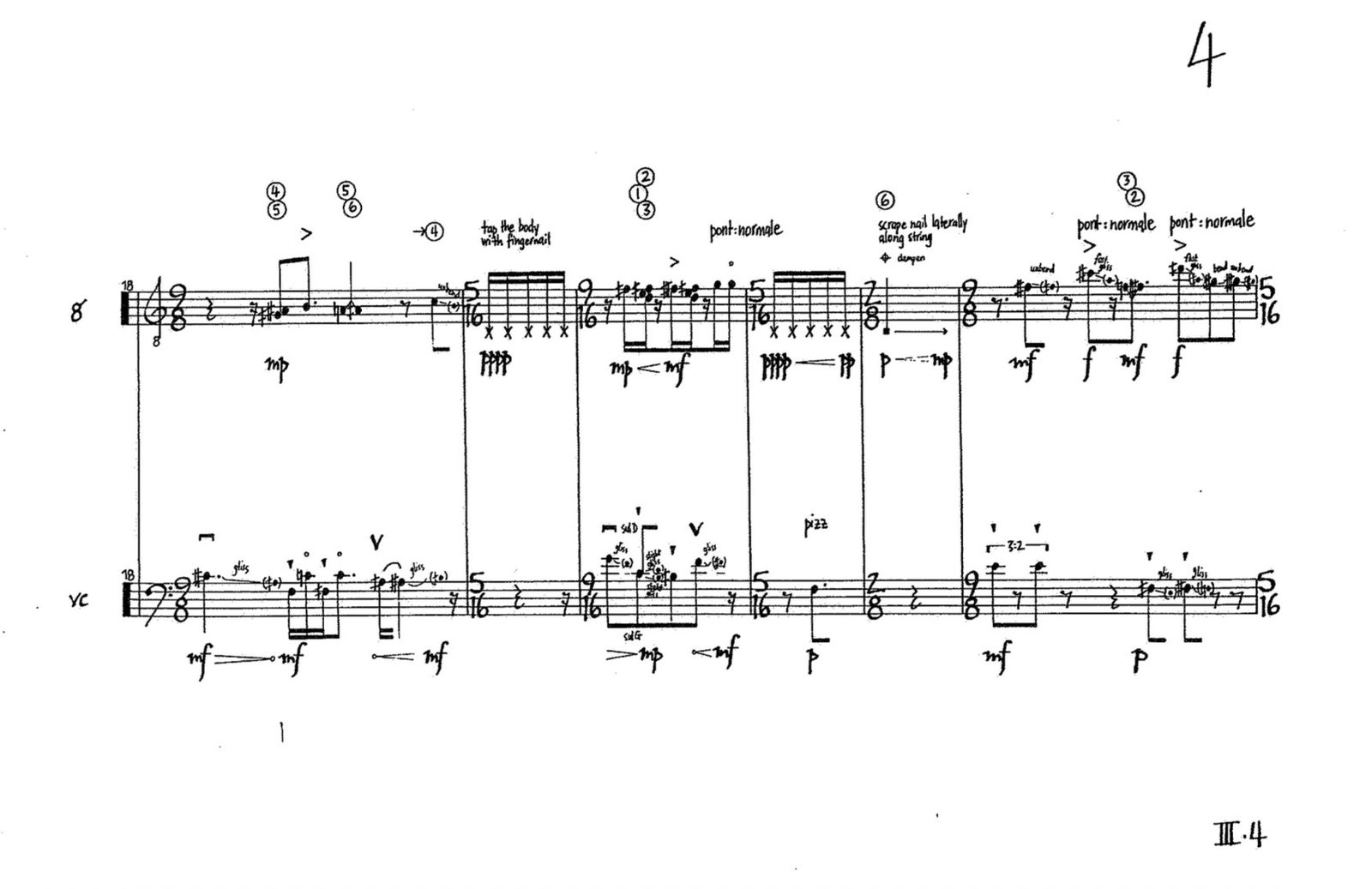
Stile I takes its material from the Cemmo masses — huge boulders just outside Capo di Ponte covered in repetitions of animals and tools, like an inventory or a list of property. The cello plays a regular semi-quaver rhythm, interrupted and elaborated by the guitar. A subtle quarter-tone scordatura on the guitar's A and B strings creates a slight discordance with the cello — something of the Oglio River winding down the valley, periodically traversed by bridges.
Stile I · guitar & cello
Stile II is slower, more spacious, with Bartók pizzicati and constantly shifting bowing positions. The movement attempts to render in music the process of carving the rock itself — densely packed detail in the small spaces between rests and long-decaying notes.
Stile II
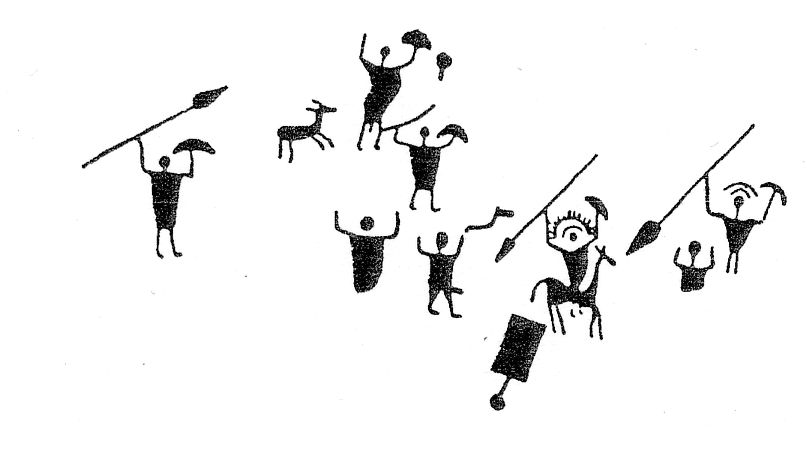
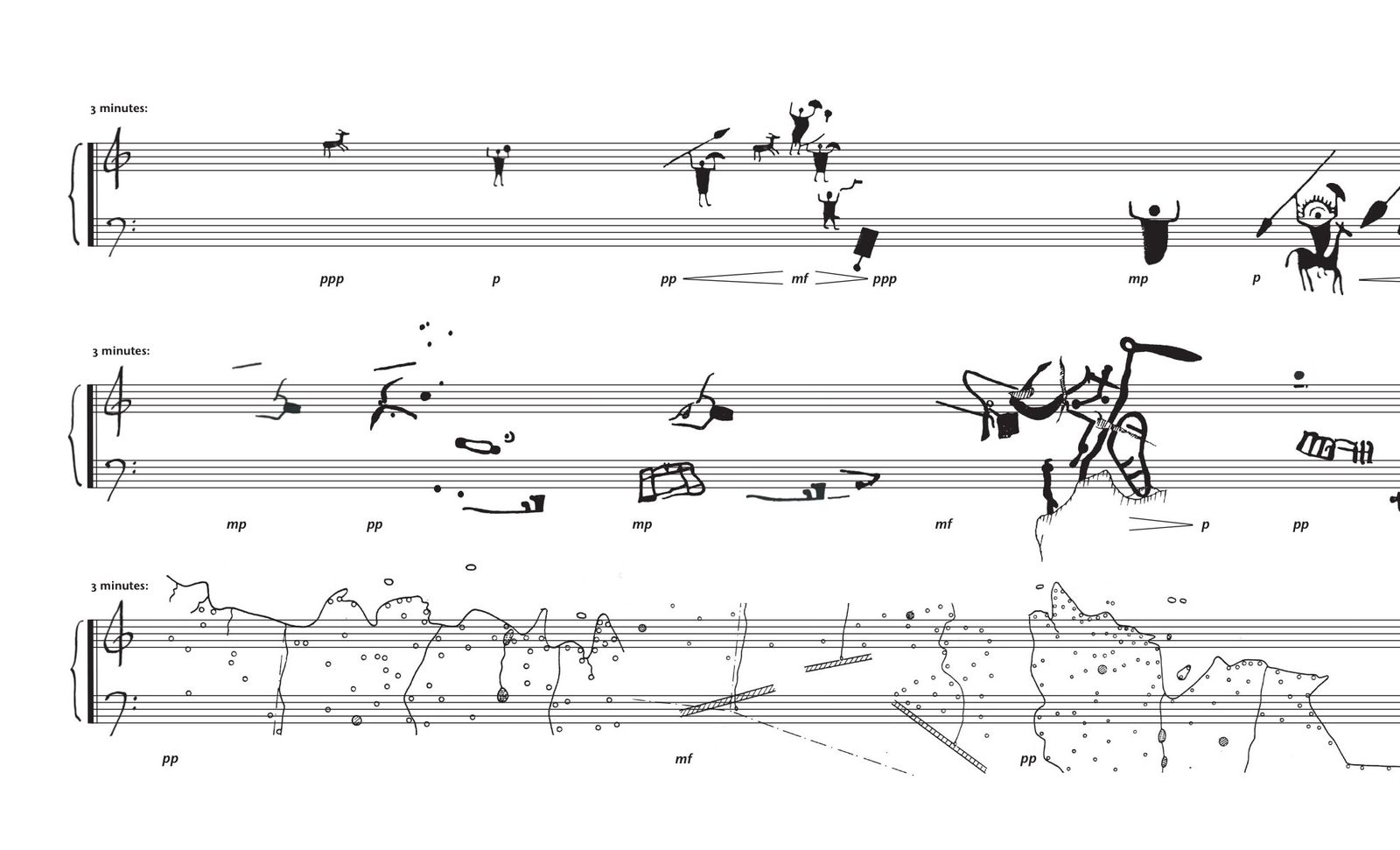
Stile III is a direct transcription from Roccia 1 in the Parco Nazionale — the scene of a tribal procession that Anati describes, in his Italian, with such abandon. The cello plays the upward-inclining spear of a hunter as an ascending glissando. When the spear reaches the hand that holds it, the guitar enters with a tremolo, taken up by the cello in a down-bow glissando that follows the hunter's arm. The feet of hunters become spiccati; the feathery headdresses become tremolo gestures; dots are played pizzicato; the empty space between figures becomes rest.
Stile III
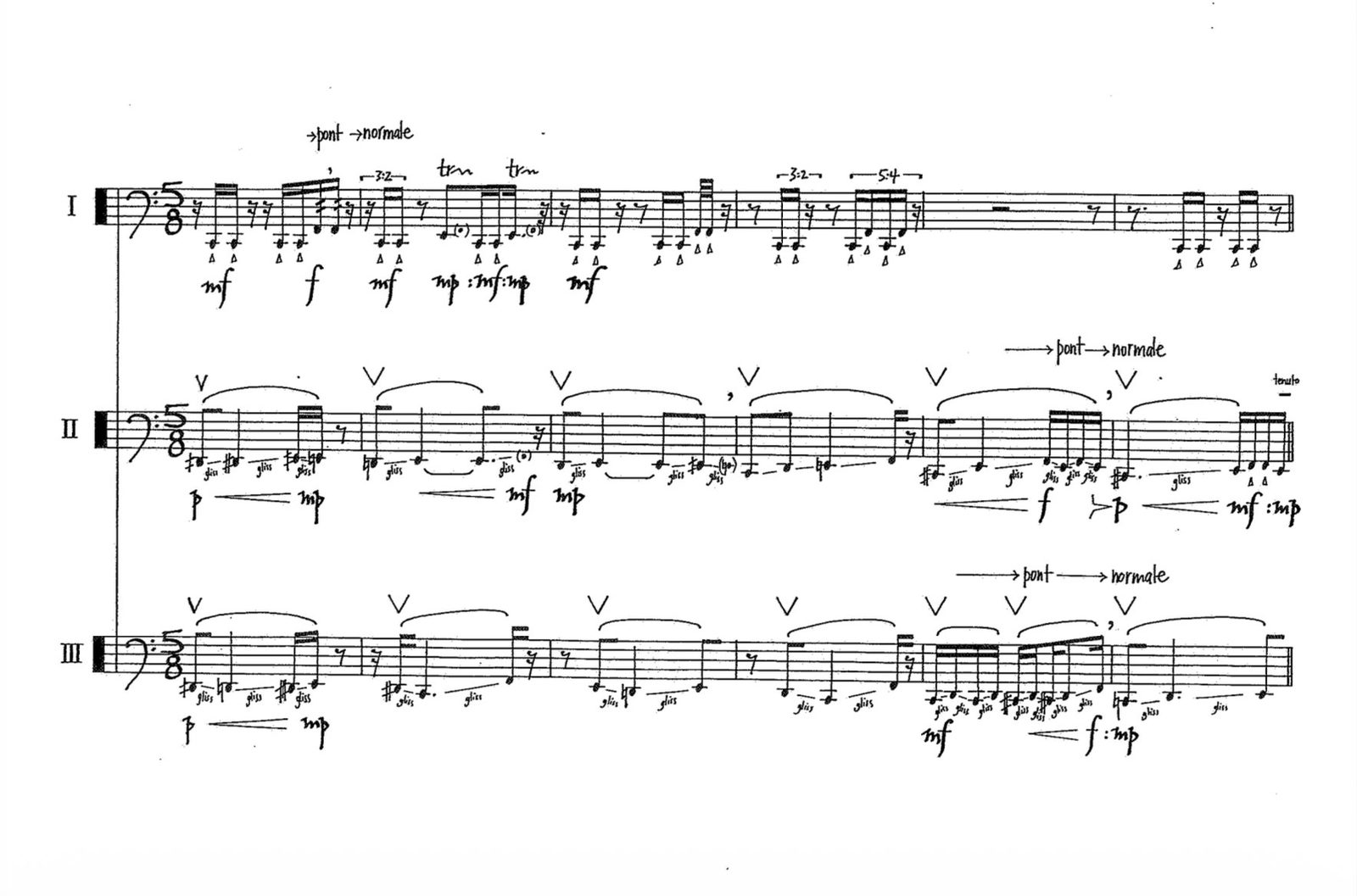
Score Val Camonica Pieces — Stile I, II & III — score (PDF) ↑Anati organises the rock carvings into seven categories: figures, animals, structures, tools, symbols, maps and shrouds. Lexicon is in seven sections corresponding to these categories — a literal list of symbols transcribed onto musical staves. The three cellists gradually develop a consistent vocabulary of articulations: spiccato feet, tremolo headdresses, ricochet decorations, microtonal vibrati. At the end of each of the seven sections, all three musicians turn the page simultaneously. Twenty audible page-turns: Anati's persistence leaving no stone unturned.
Sarcophagus is a monument. The word is from the Latin, and before that the Greek, for flesh-consuming. The rock carvings of Val Camonica are monuments to a series of now-dead civilisations — the coercive power of the rock has consumed the bodies and left only signs.
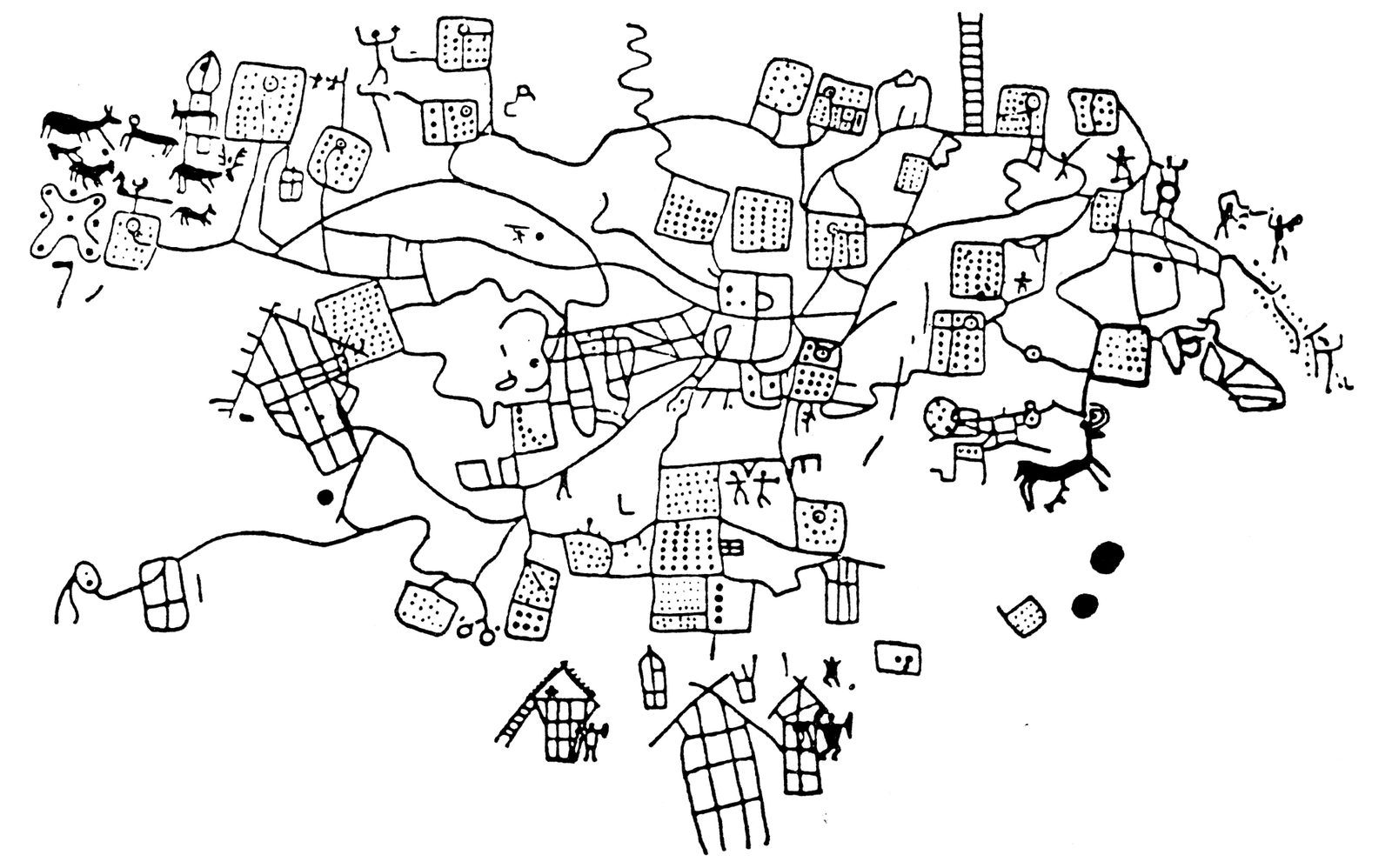
The piece is built on the Mappa di Bedolina, an ancient rock carving high above Capo di Ponte that is sometimes described as the first extant example of a map. The two violins, two violas, two cellos, two basses — pairs everywhere — echo the doubling of map and landscape. The lines weave around and overlap, like a weathered map superimposed over the now-altered course of the river. Glacial shards of sound — scratching the surface — encase something less reachable below.
Sarcophagus is dedicated to my grandmother, Marie Burnett, who died not long before I wrote it. She was a steady encouragement through my early years of composing, and the piece carries her.
Sarcophagus · string octet
Film
Film by Louise Curham · 2007
Score Val Camonica Pieces — Sarcophagus — score (PDF) ↑Inventario is a list of musical objects, all drawn from Anati's transcriptions of La Grande Roccia di Naquane — the largest and most florid of the rock carving scenes. The piece is in three sections, each with its own notation. The first establishes a repeating metric pattern (2, 5, 5, 3, 8) and builds an inventory of precisely notated gestures: interlocking demi-semi-quavers, microtonal clusters, glissandi, bisbigliando on timbral fingerings, bowed cymbal, resonant ceramic bell. Each line, like a line in Anati's archaeological inventory.
The second section shifts to graphic notation — noteheads followed by lines, the line indicating duration and movement of pitch. In the final sixty bars, the rock carvings themselves are transcribed directly onto the staves: figures, animals, tools, abstract symbols, scattered across the score much as they appear on the rockfaces. By this point, the ensemble has learned how to read them.
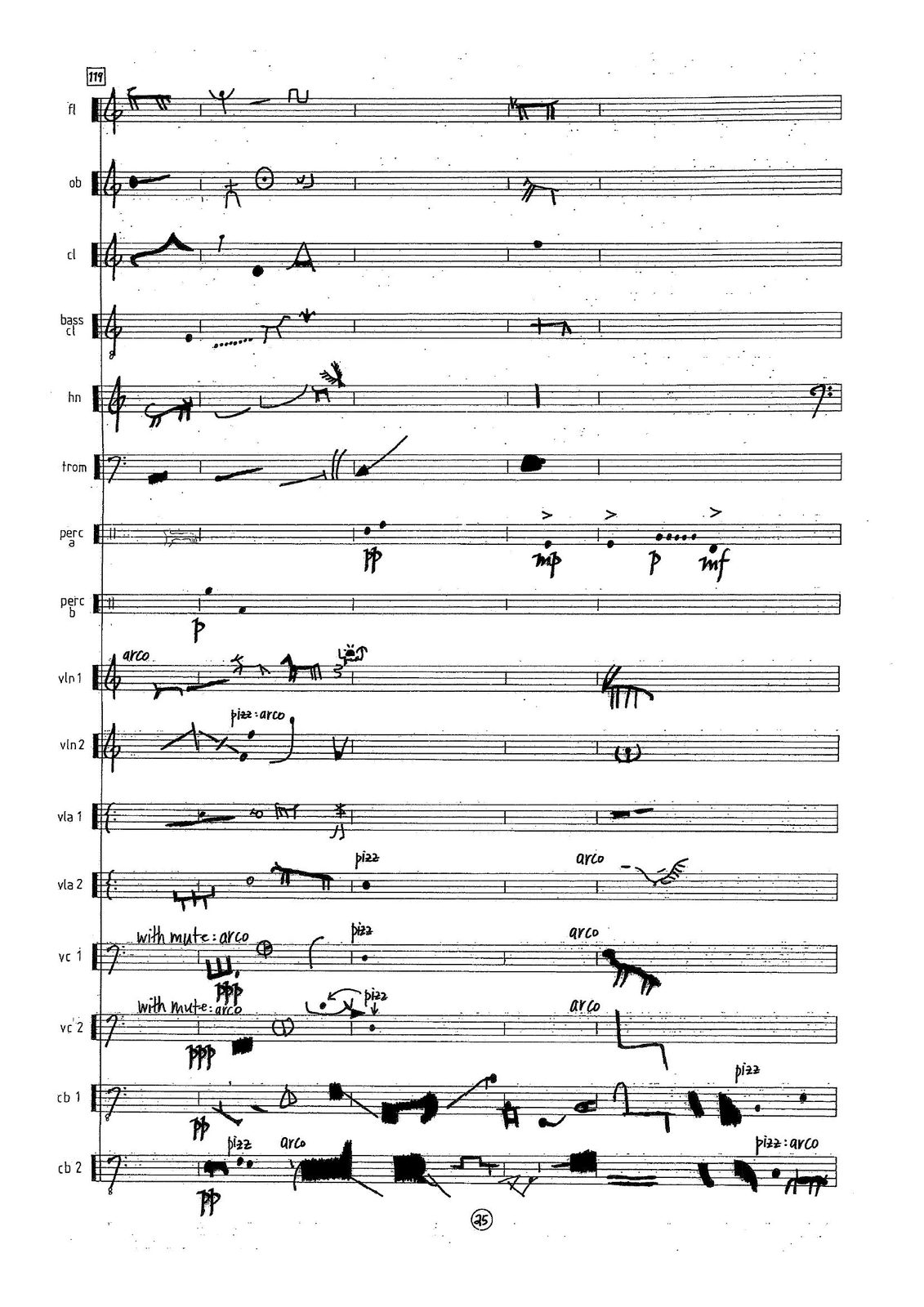
This was the piece where I first let go of conventional notation and trusted graphic symbols to carry the music. At the first performance, when the score dropped the notes and the pictographs took over, I could hear the liberty in the air — a ripple of electricity through the ensemble and through the room. It confirmed the direction.
Inventario · fifteen instruments
Score Val Camonica Pieces — Inventario — score (PDF) ↑Unlike Anati's attempt to encompass a universal inventory, Animali takes one category only — the animals — and examines it in detail. The score opens with an intricate array of indications (staccato, tenuto, accent, ricochet, glissando, artificial harmonic, col legno, lefthand pizzicato) all to be played molto pianissimo. The work could only have been imagined with the cooperation of a musician not daunted by such demands.
I met Yasutaka at the Akiyoshidai Contemporary Music Festival in Japan in 1997. He has played my music for more than twenty years now — most recently a watercolour score I wrote for him. Animali is my gift to him, and my thanks for his passion, his skill, and his friendship.
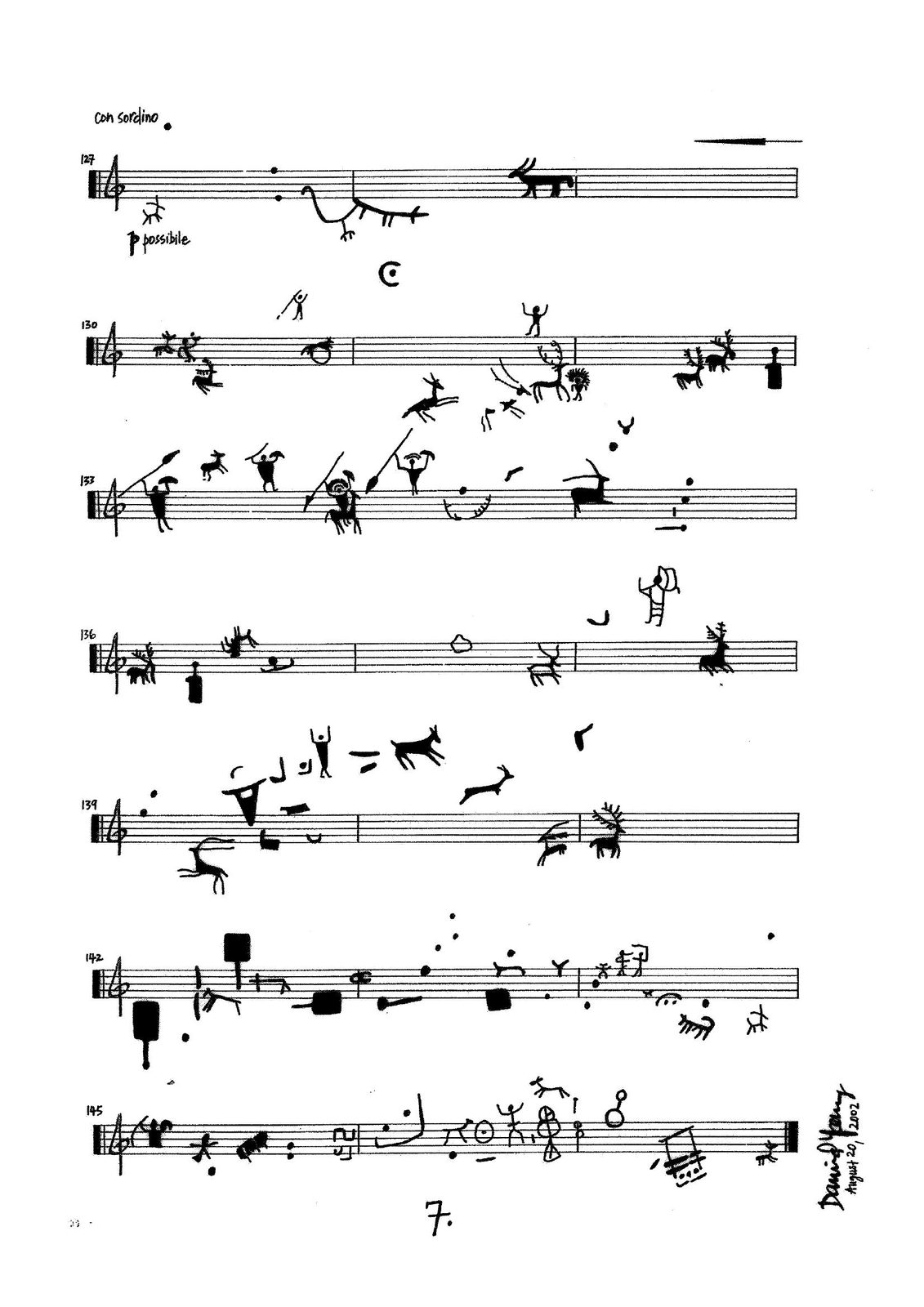
The energy in the piece aims to generate a sense of the music leaping into life, just as the rock carving animals seem to be leaping on the stone. Whimsical graphic interpolations between the notes prepare the reader for the final page, which is simply the rock carvings themselves, superimposed on an otherwise blank stave. As the clarinettist Carl Rosman put it: in a relatively unusual act of compositional humility, I write myself out of the piece.
Animali · Yasutaka Hemmi, violin
Score Val Camonica Pieces — Animali — score (PDF) ↑Roccia — rock — was my first score in colour. It uses a simple time–space notation: pitch runs vertically, duration horizontally, measured in seconds. Each instrument reads markings in a different colour. Orange for clarinet, green for violin, brown for percussion, black for piano. Everyone can see everyone. Conventional marks remain for dynamics and pedalling. Descriptive instructions scatter across the pages — con calma, con sorpresa, fuori controllo — always with an edge of irony.
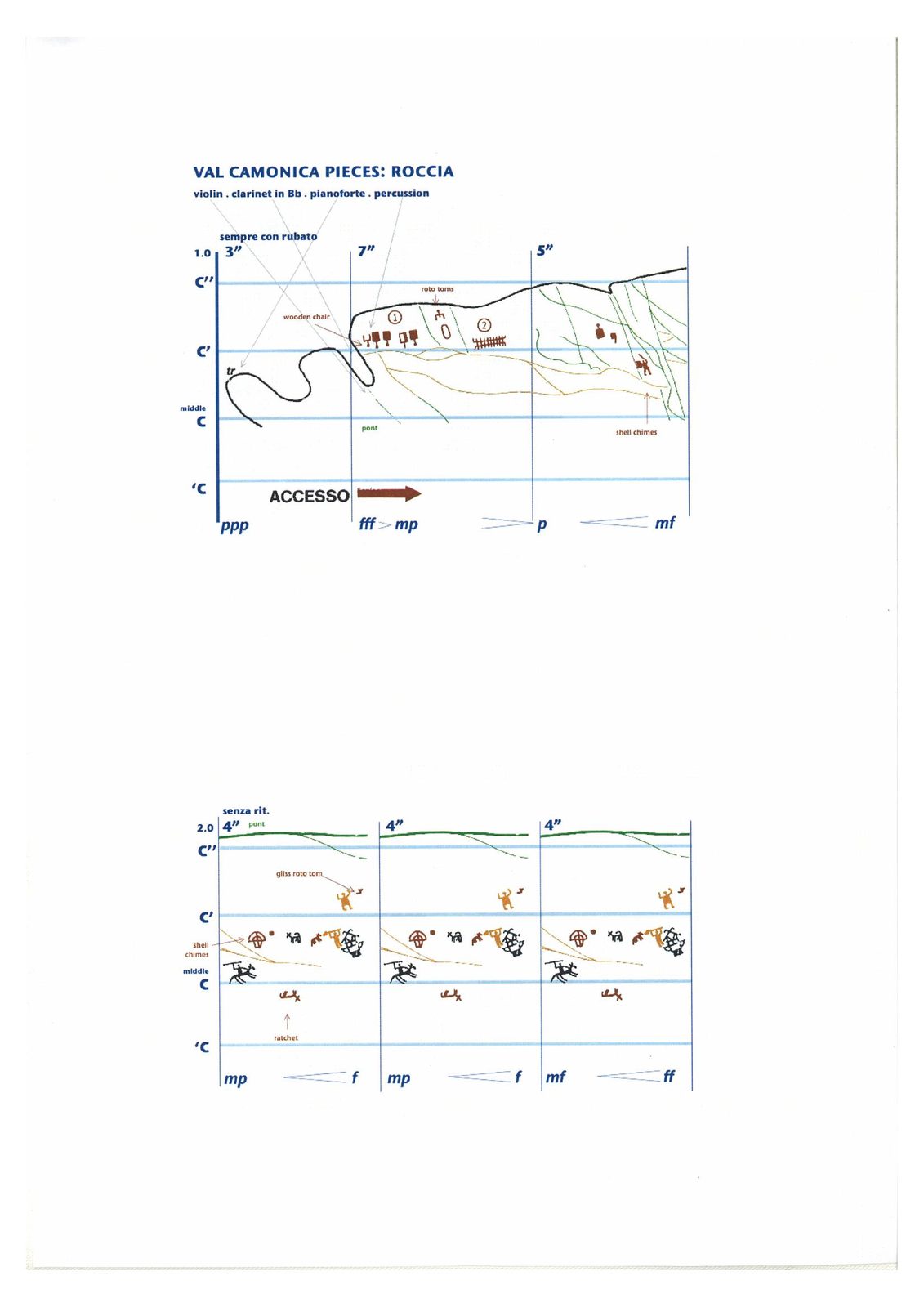
The notation is deceptively exacting. Despite the appearance of freedom, the relative position of noteheads and lines leaves surprisingly little room for choice. Roccia was performed twice in close succession — once in Ghent from printed parts, once in Melbourne with the score projected large for the audience to see. Different cities, different musicians, different projection contexts. It sounded the same on both occasions.
Roccia · clarinet, violin, piano, percussion
Score Val Camonica Pieces — Roccia — score (PDF) ↑The final piece. Incisioni rupestri is the ordinary Italian for rock carvings. The solo piano is, in many ways, a distillation of what came before. Direct transcriptions of the rock carvings are superimposed on the stave. Time-space notation is used, but more simply: a single durational indication at the top of each line (three minutes per line). Familiar-looking dynamics, floridly graphic but monochromatic. There is no ensemble and no conductor, which engenders an inevitable rubato — the latitude of a cadenza.
This is one of only a handful of works I've written for solo piano. I was a pianist myself once, but fell out of love with the instrument, largely because of a bad experience with a professor at university. This piece I love, though — and the care and detail that Mark Knoop brought to his performance was humbling, and deeply touching.
Performance documentation
↑The spirit of the mountain
Studying the rock carvings, the question arises as to why so many inscriptions are concentrated in this particular valley. It was only in 2002, standing in Capo di Ponte for the first time, that an explanation presented itself.
The town is flanked by two mountains — Pizzo Badile on one side, Monte Conarena on the other. At the spring and autumn equinoxes, both are subject to unusual optical phenomena. Before sunrise, the ghostlike shadow of Badile Peak appears in the sky behind itself. At sunset, a cleft at the top of Monte Conarena opens and a shaft of light appears to shine out from inside the mountain.
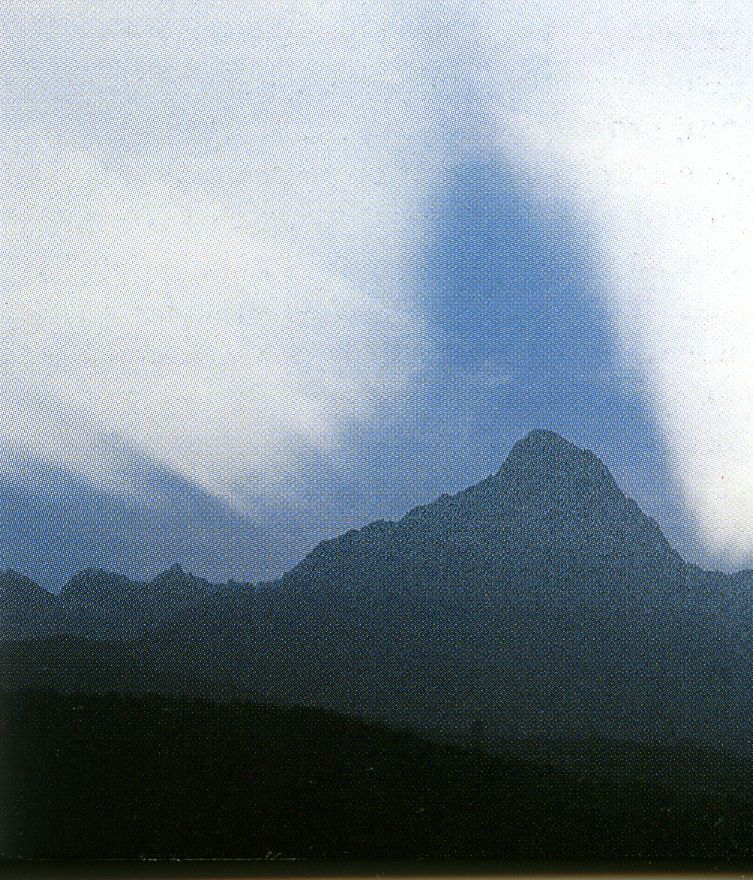
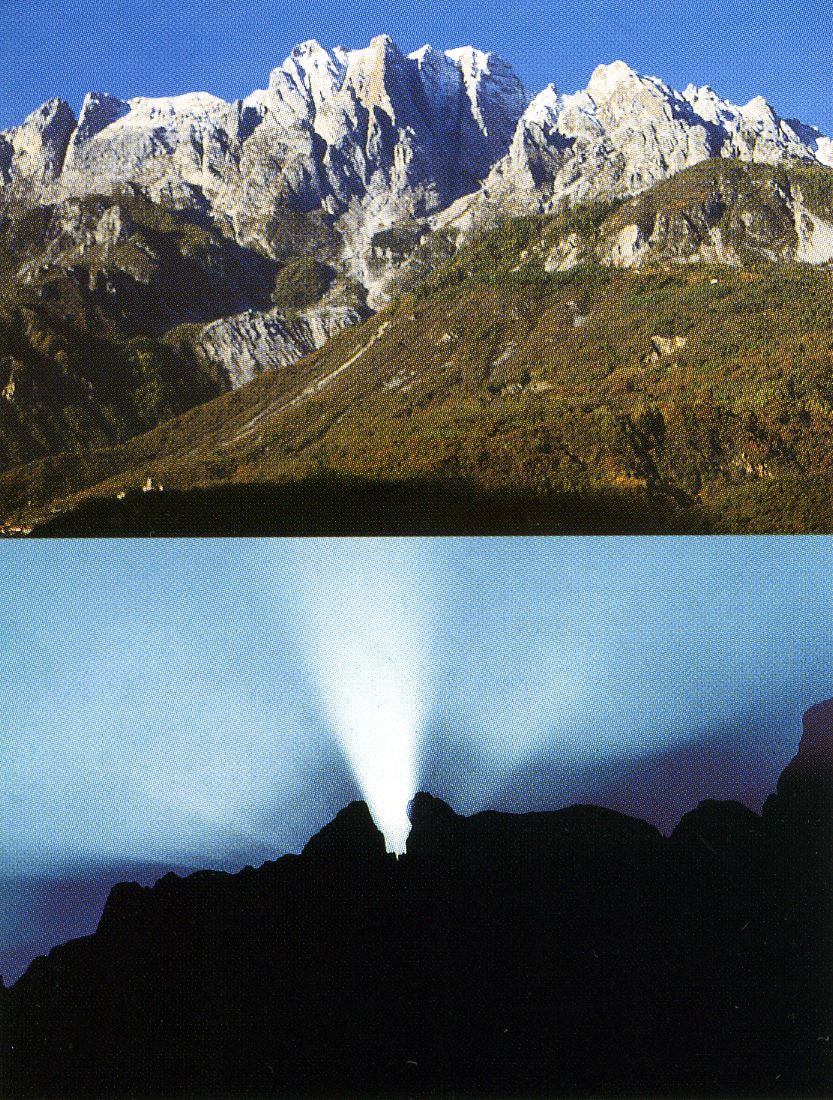
To the people of this valley since the Bronze Age, these manifestations were and still are a cause for bewilderment and veneration. Despite Anati and his many disciples, we still do not know who made the rock carvings, nor what they were intended to signify.
Further reading & links
Photographs
Performances & recordings
Credits — 2007 recording